
Pleasure serves a beautiful purpose in our lives.
As humans, we’ve evolved to seek out pleasurable experiences that promote survival. For example, when we eat nourishing food, our brain releases dopamine, a feel-good neurotransmitter that encourages us to repeat the experience.
This is the original design of our reward system: pleasure as motivation to meet our needs.
But in today’s world, that system can get hijacked.
Natural Pleasures: Effort + Reward
Here are some examples of natural pleasures we’ve evolved to enjoy:
- Eating whole, nourishing foods
- Moving our bodies
- Restful sleep
- Connection and intimacy
- Accomplishment
- Cleanliness and order
- Serving others
These types of pleasures may require effort—planning meals, making time to move, scheduling a call with a friend—but they provide a net-positive effect. The afterglow feels deeply satisfying and aligned with our values.
Artificial Pleasures: Quick Hit, Low Return
Now contrast that with artificial pleasures: concentrated, human-made experiences that flood our brain with dopamine—fast.
- Sugar, processed foods
- Alcohol, caffeine, and nicotine
- Social media, video games
- Online shopping
- Streaming and binge-watching
Are these things “bad”? Not necessarily. It’s the dose that makes the poison.
The problem is when these quick hits become our primary source of pleasure. Over time, the brain downregulates dopamine receptors, causing us to crave more to achieve the same effect, while natural pleasures begin to pale in comparison.
Ask Yourself: What’s the Net Effect?
Here’s a powerful question to ask before you indulge:
“What’s the net effect?”
Does this choice leave you better off—or worse?
Natural pleasures tend to build us up over time. Artificial pleasures often come with a crash: regret, bloating, debt, anxiety, disrupted sleep.
Some examples:
- A glass of wine = a lovely ritual
- Four glasses = poor sleep, a headache, and cravings the next day
- One cookie = mindful enjoyment
- A box of cookies = energy crash + guilt spiral
This isn’t about restriction. It’s about awareness and intention.
Training Your Brain to Crave What Truly Serves You
So the question becomes:
Where do you want your pleasure—and your dopamine—to come from?
Do you want most of your feel-good moments to come from things that build you up, even if they require some effort?
Or from habits that give you a quick hit, but leave you drained, foggy, or frustrated afterward?
The good news? You can retrain your brain.
It starts by reducing the frequency of those artificial pleasure hits and increasing natural, nourishing ones.
If your diet includes a lot of sugar or ultra-processed foods, for example, the more you reach for whole, real foods, the less your body will crave the others. Over time, your brain stops putting those hyper-stimulating foods on a pedestal.
That doesn’t mean you have to eliminate all artificial pleasures.
I’ll be honest—I love my morning coffee ritual. I enjoy a glass of wine with dinner occasionally. I savour sweet treats. And yes, I unwind with a show on Netflix (we recently finished This Is Us and Ozark—highly recommend both!).
However, those things complement a life that’s already rich in connection, purpose, movement, and simple joys, rather than an escape from a life that feels stressful or unsatisfying.
Because here’s what I’ve found to be true:
When my days are filled with natural pleasures—movement, rest, good food, meaningful work, connection—my cravings for the artificial ones fade.
And when I do choose them?
I enjoy them even more because I’m not using them to numb out. I’m choosing them from a more grounded place.
Next in Part 2…
Next week, I’ll show you how to infuse more natural and simple pleasures into your daily routine.
Because the more small pleasures you consciously include, the less you’ll find yourself mindlessly reaching for food, wine, or a screen to feel good.

Hi! I’m Elaine, a Certified Nutritionist and Master Certified Health Coach. I support women in achieving their health and body goals while prioritizing a peaceful and balanced relationship with food.
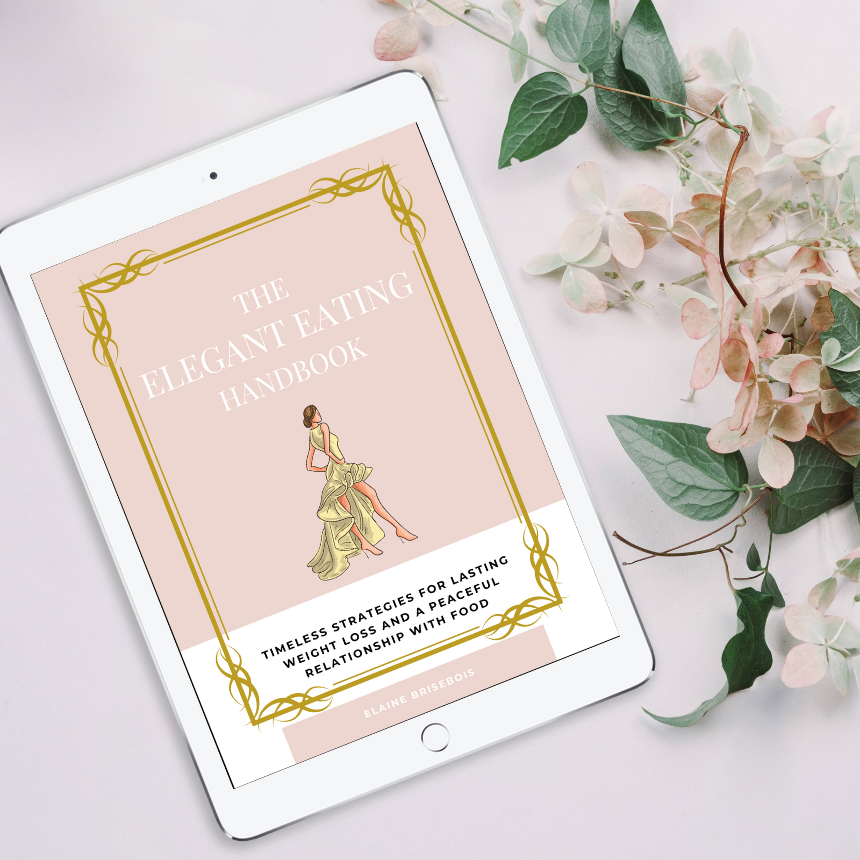
Get a free copy of my handbook!
The Elegant Eating Handbook: Timeless Strategies for Lasting Weight Loss and a Peaceful Relationship with Food.
share with friends
keep reading...



[…] (Be sure to read part one first before reading this part!) […]
[…] our diet is filled with a lot of concentrated pleasure, our primitive brain is just doing its job when it takes note of it and creates a large amount of […]
[…] You can read more about this in my blog post: Pleasure – Natural vs. Artificial. […]