

Intermittent Fasting (IF) has gained popularity in recent years, but the concept isn’t new—it’s simply been repackaged.
Fasting is an ancient, time-tested practice.
As humans, we’ve evolved to function without food for extended periods. Intermittent fasting mimics this natural rhythm by intentionally cycling between periods of eating and fasting.
What Is Intermittent Fasting?
We all fast naturally when we sleep, from the time we finish dinner until we eat again in the morning. That’s where the word “break-fast” comes from.
However, most people today don’t benefit much from this overnight fast, as late-night snacking followed by early breakfasts shortens the natural fasting window.
Intermittent fasting extends this fasting period with the intention of supporting fat loss, metabolic health, and other benefits.
The Benefits of Fasting
Fasting can be a helpful tool for fat loss, but like any approach, it works best when it helps you maintain a consistent calorie deficit.
That means you still need to consume fewer calories than you burn in order to lose body fat.
That said, intermittent fasting offers more than just weight loss benefits. When done correctly, potential benefits may include:
- Improved blood sugar regulation and insulin sensitivity
- Increased energy and mental clarity
- Enhanced cellular repair through processes like autophagy
- Reduced inflammation, especially when fasting supports improved blood sugar or weight loss
How It Works
When you eat, your insulin levels rise and your body stores excess energy as glycogen (in the liver and muscles) or body fat.
Glycogen is your short-term, quick-access energy source. Fat is your long-term storage.
Your body has limited glycogen capacity. If you’re grazing all day—three meals plus snacks and caloric beverages—you often take in more fuel than you need.
When you fast, insulin levels drop, allowing your body to access stored energy. First, it taps into glycogen. As fasting continues, it begins to burn more stored fat for fuel.
Important: Fasting allows your body to access stored fat more efficiently, but actual fat loss still requires a calorie deficit over time.
What a Fasting Window Looks Like
One of the most popular intermittent fasting approaches is the 16:8 method, where you fast for 16 hours and eat within an 8-hour window.
This might sound intense, but remember: most of that fasting time includes sleep. For example, you might eat your first meal at:
- 12:00 PM and finish eating by 8:00 PM
- 10:00 AM to 6:00 PM
- 9:00 AM to 5:00 PM
During the remaining hours, you’re fasting—no food, just non-caloric beverages like water, herbal tea, or black coffee.
But here’s the thing: you don’t need to start with 16 hours.
A gentle place to begin is a 12-hour fast—for example, finishing dinner by 7:00 PM and having breakfast at 7:00 AM. This alone can help reduce late-night snacking, support digestion, and give your body a clearer “off” switch at the end of the day.
If that feels easy and you’re sleeping well and maintaining good energy, you can gradually experiment with longer fasts—such as 14 or even 16 hours—on the days that make sense for you.
Finding Your Fasting Sweet Spot
Intermittent fasting should work with your life. The best schedule is one that supports your energy, hunger patterns, and routine.
Here’s what that might look like in practice:
- A 12-hour eating window (e.g., 7:00 AM to 7:00 PM) typically allows for three meals per day—a great starting point for most people.
- An 8–10 hour eating window often includes two meals and a snack or two larger meals, depending on your needs and schedule.
You don’t have to fast the same way every day.
Some of my clients fast for 16 hours a few days a week when it feels easy and natural, and stick with a 12-hour window the rest of the time. Others find that a consistent 14-hour fast works best.
The key is flexibility. Your fasting routine should feel supportive, not restrictive or forced. If you’re constantly thinking about food, struggling with energy, or dreading your fasting hours, that’s valuable feedback. You can always scale it back.
What About Earlier Eating Windows?
Some emerging research suggests that early time-restricted eating—such as eating between 7 AM and 3 PM—may offer additional metabolic benefits, particularly for women with insulin resistance or prediabetes. Earlier eating windows may support better insulin sensitivity, blood sugar regulation, and even appetite cues.
But timing isn’t everything.
The most effective fasting schedule is the one you can actually stick to consistently, without stress. If a later eating window feels more natural for your workday or routine, that’s okay too.
Start Where You Are
You don’t have to overhaul your routine to benefit from fasting. If you’re not hungry in the morning, you might naturally extend your overnight fast without much effort. That’s a great place to start.
Personally, I use intermittent fasting when it fits into my day. I might delay my first meal a little—but I still enjoy my morning coffee ritual :)
A Few Things to Keep in Mind Before You Fast
Intermittent fasting isn’t for everyone, and even when it is, the way you approach it matters.
Before jumping in, consider your current health status, lifestyle demands, and relationship with food.
When Fasting May Not Be Appropriate
Fasting is not recommended if you’re:
- Pregnant or breastfeeding
- Underweight or experiencing unexplained weight loss
- Recovering from disordered eating
- Dealing with high stress, burnout, or very low energy availability
If you have a medical condition—such as diabetes, thyroid issues, or hormonal imbalances—or if you take medications that affect blood sugar, consult your healthcare provider before trying intermittent fasting.
A Note for Women
Women, especially during their reproductive years, may respond differently to fasting than men.
Some women find that intermittent fasting supports their energy, digestion, and appetite regulation. Others notice changes in mood, menstrual cycles, or increased stress, especially when fasting is combined with:
- Low-calorie intake
- High stress or poor sleep
- Intense training or excessive exercise
The female body is finely attuned to cues of safety and nourishment. Too much restriction—whether through fasting, dieting, or overexercising—can disrupt hormone function, ovulation, and metabolism.
Fasting with Your Cycle
Many women find fasting more comfortable during the follicular phase (the first half of the cycle), when energy is naturally higher.
During the luteal phase (the second half), your body requires more fuel. Hunger and cravings often increase, and pushing through long fasts during this time can backfire.
A 12–14 hour overnight fast is generally well tolerated and still beneficial. If you feel strong and energized, you can experiment with slightly longer fasts on occasion. However, if you’re experiencing sleep issues, irritability, or changes to your menstrual cycle, it may be a sign to ease up.
If You’re Trying to Conceive (TTC)
If you’re actively trying to conceive, it’s best to approach intermittent fasting with caution.
In some cases—such as PCOS, insulin resistance, or higher body weight—gentle fasting (like a 12–13 hour overnight fast) can support metabolic and reproductive health. But for others, especially those who are already lean, under stress, or dealing with irregular cycles, longer fasts can suppress ovulation and disrupt hormone balance.
If you do choose to fast while TTC:
- Stick to shorter fasts (12–13 hours)
- Ensure you’re eating enough during the day
- Pay attention to signs of fatigue, low libido, or changes in your cycle
Your body needs to feel well-fed, safe, and supported to optimize fertility. When in doubt, speak with your doctor or fertility practitioner to determine what’s best for you.
Don’t Want to Fast? That’s Okay Too.
You don’t need a formal fasting protocol to support better health.
Simply eating three satisfying, well-spaced meals per day—without constant grazing—can help improve insulin sensitivity and support metabolism, especially if you’re working to regulate blood sugar or lose fat.
Why I Like Intermittent Fasting (When It Fits)
What I love most about intermittent fasting is that it adds structure and simplicity, especially in a world full of food noise and constant decisions.
It’s:
- Accessible and free
- Easy to adapt to any dietary style
- One more tool in the toolkit—not a silver bullet
And when it’s used wisely, it can help you reconnect with natural hunger cues, improve focus, and reduce emotional eating triggers.
Want Personalized Support?
Learn more about my 1:1 nutrition & weight loss coaching program for women here.
References & Further Reading
- Sutton EF, et al. Early time-restricted feeding improves insulin sensitivity, blood pressure, and oxidative stress. Cell Metabolism. 2018;27(6):1212–1221.e3.
- Longo VD, Panda S. Fasting, circadian rhythms, and time-restricted feeding in healthy lifespan. Cell Metabolism. 2016;23(6):1048–1059.
- Cienfuegos S, et al. Effects of time-restricted eating on weight loss and metabolic health in women. Obesity. 2020;28(5):870–878.
- de Cabo R, Mattson MP. Effects of intermittent fasting on health, aging, and disease. New England Journal of Medicine. 2019;381(26):2541–2551.

Hi! I’m Elaine, a Certified Nutritionist and Master Certified Health Coach. I support women in achieving their health and body goals while prioritizing a peaceful and balanced relationship with food.
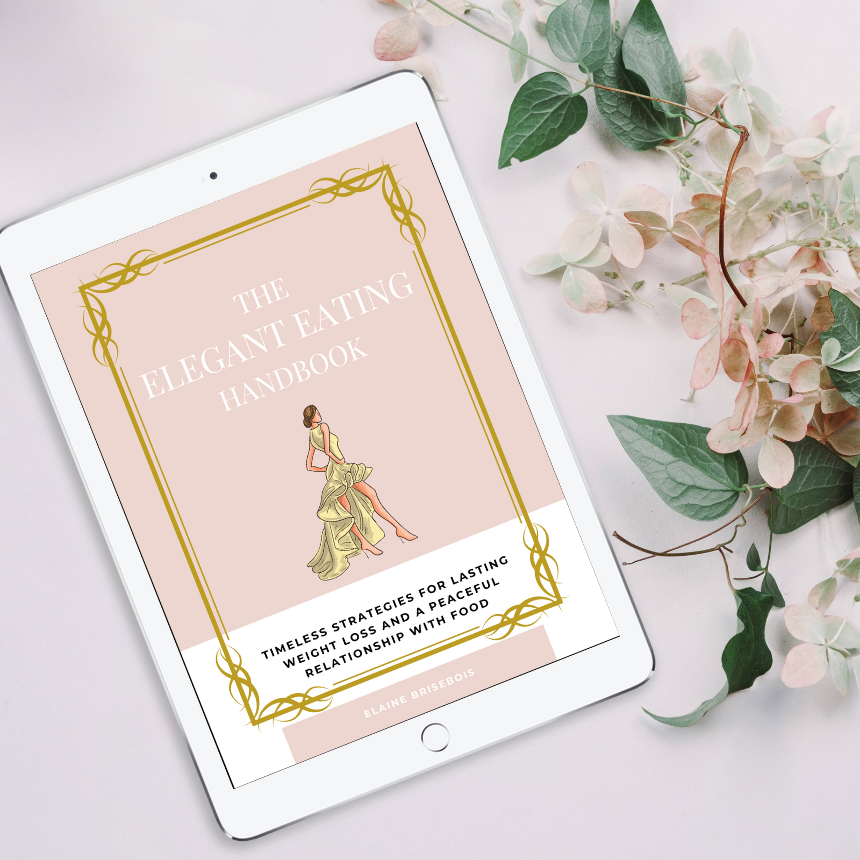
Get a free copy of my handbook!
The Elegant Eating Handbook: Timeless Strategies for Lasting Weight Loss and a Peaceful Relationship with Food.
share with friends
keep reading...



[…] example, not snacking between meals, intermittent fasting/timed eating, and increasing low energy density/high volume foods (i.e. veggies and fruit) are just 3 of the […]
[…] Fast Intermittently: Shrink Your Eating Window + Limit […]