
An urge is an intense desire.
It often feels urgent—like something you need to act on immediately.
Here are a few examples to illustrate…
You’re working from home, sitting in front of your computer. You’re tackling something tedious or stressful, and the thought of that chocolate in your pantry suddenly becomes very compelling.
You tell yourself no—it wasn’t in the plan. You’re trying to lose weight, and logically, you know it’s not in your best interest. But now the chocolate is calling to you. You can’t focus. You start rationalizing: “Just a few pieces will make this task easier.”
Or maybe you’ve just finished dinner. You’re full. But you have the urge to polish off the rest of the dish you planned to save for tomorrow’s lunch. You’re not hungry, but the desire to keep eating is strong.
Or it’s 5 p.m. You’ve had a long day. You told yourself you wouldn’t drink tonight, but suddenly you have a powerful urge to pour a glass of wine. Rationally, you know it’s not aligned with your goals. But in the moment, the desire feels too strong to ignore.
These are urges.
They manifest as intense desire, often accompanied by justifications, and paired with discomfort, demanding immediate relief.
And while we’re talking about food and alcohol here, urges can show up in other ways too: checking your phone, scrolling social media, shopping, or anything else that gives your brain a hit of relief or pleasure.
How to Handle Urges (3 Options)
1. Comply With It
This means you give in—you eat (or do) the thing your brain is pushing you to do.
It often feels like the only way to relieve the discomfort.
You get momentary relief—but at a cost.
The long-term consequences might not feel so good—physically (bloating, fatigue, weight gain) or emotionally (guilt, frustration, disappointment).
You’ve delayed the discomfort, not avoided it.
2. Resist It
This looks like relying on willpower or distracting yourself to avoid the discomfort.
Picture the little kid with her eyes closed and hands over her ears chanting, “Lalalalala, I can’t hear you.”
I’ve had clients tell me that sometimes they’ll just go to bed, so they don’t have to deal with their nighttime urges to snack.
Tactics might include:
- Closing the kitchen after dinner
- Brushing your teeth
- Taking a bath or going for a walk
These strategies can help in the short term, but they don’t always address the root of the urge.
Resisting often feels like a battle:
“This shouldn’t be happening.”
“I have no willpower.”
“There’s something wrong with me.”
Now you’re not only experiencing the urge—you’re also arguing with it.
You’ve layered judgment and mental drama on top of the desire, making it feel even more intense.
The urge holds all the power.
The food, the wine—it feels like the only solution.
3. Allow It
This is the game-changer.
Allowing an urge means letting it be there without answering it.
You feel the discomfort on purpose. You observe it instead of reacting to it.
You breathe through it. You get curious. You let the wave rise… and fall.
This technique is known as urge surfing, a strategy rooted in mindfulness-based therapies like Dialectical Behavior Therapy (DBT). Research shows that learning to observe urges without reacting helps reduce their intensity over time.
Ask yourself:
- What does this feel like in my body?
- What emotion am I trying to avoid?
- Is this actually as bad as I thought?
Sometimes the feeling you’re trying to escape is something heavy, like sadness, grief, or anxiety.
At other times, it’s more subtle, like boredom or restlessness.
Whatever it is, the goal isn’t to push it away but to allow it, without trying to distract or numb it.
In some cases—especially if you’ve been regularly consuming things like added sugars or alcohol—it might even be mild physical withdrawal. That can make the cravings feel especially intense.
Allowing the urge doesn’t mean it disappears instantly.
But it does start to loosen its grip.
Think of it like riding a wave. The urge rises, peaks, and then eventually passes.
The more you practice allowing, the more your brain learns:
This urge doesn’t get rewarded.
And when that happens, the brain stops turning up the volume. Because without a reward, there’s no reason to keep making noise.
The Science Behind the Urge
Every time you give in to an urge, your brain gets a hit of dopamine—the “feel good” chemical.
That’s how habits are reinforced.
The more concentrated the pleasure (like sugar or alcohol), the bigger the dopamine hit. The bigger the hit, the more your brain wants it again.
These shifts aren’t just anecdotal—they reflect how the brain’s dopamine reward system works. When repeated cues no longer lead to a reward, the brain eventually weakens that craving loop—a process known as extinction in behavioural science.
I discussed this further in a two-part series on pleasure here and here.
But here’s the key:
Your brain created the desire. It can also un-create it.
Just like Pavlov’s dogs.
In the famous study, dogs were conditioned to associate the ringing of a bell with food. Eventually, they salivated just from hearing the bell, even when no food was present.
However, when the bell continued to ring without any food afterward, the dogs stopped salivating.
No reward = no continued response.
Same with your urges.
Your brain has linked certain cues (such as time of day, emotions, and even smells) with specific rewards (like scrolling, chocolate, and alcohol).
But when you stop answering those urges, your brain eventually stops making the connection.
If the reward no longer follows the cue, the craving fades.
Urges Don’t Control You (Your Thoughts Do)
The urge itself doesn’t make you eat the chocolate.
Your thoughts do.
Thoughts like:
- “This will make everything better.”
- “One bite won’t hurt.”
- “I’ll start over tomorrow.”
- “It’s not that big a deal.”
When you believe those thoughts—even a little—you give the urge power.
But the urge has no authority on its own.
You’ve ignored urges before: to scream at a co-worker or send that angry text.
Why?
Because you paused. You let your higher brain weigh in.
You knew, rationally, that reacting would have consequences. So you didn’t act.
That same skill applies here.
The key is to collect more of those small wins—urges allowed, urges unanswered. That’s how the rewiring happens.
What Happens When You Collect More Unanswered Urges?
You rewire your brain.
You build resilience.
You gain confidence.
And if you still want to include things like chocolate or wine in your life?
You do it intentionally—from your prefrontal cortex (your higher brain), not from urgency or impulse.
When you stop reacting automatically, you create space for thoughtful, aligned choices.
Final Thought
Urges are not problems.
They’re just suggestions from your brain.
And they only become a problem when they consistently lead you away from the life and results you want.
You don’t have to answer them.
You only need to notice them, allow them, and make a conscious decision about what happens next.
Ready to permanently lose weight, stop overeating, and create a more peaceful relationship with food?
Learn more about my private 1:1 program here.
Download a copy of my Elegant Eating Handbook to learn timeless strategies for lasting weight loss and a peaceful relationship with food.

Hi! I’m Elaine, a Certified Nutritionist and Master Certified Health Coach. I support women in achieving their health and body goals while prioritizing a peaceful and balanced relationship with food.
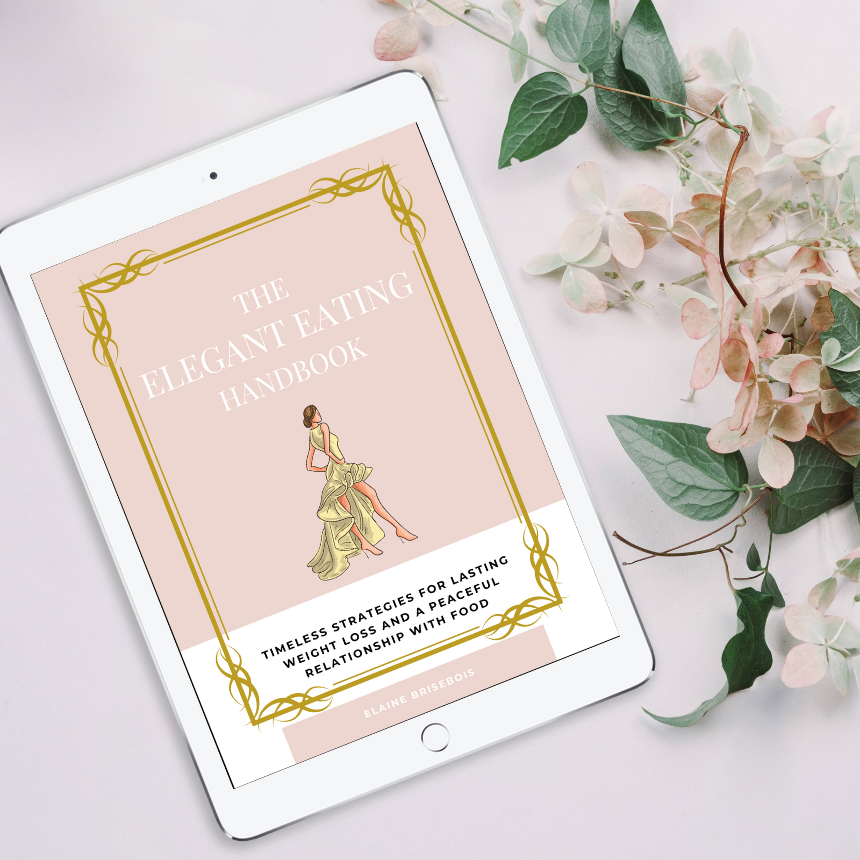
Get a free copy of my handbook!
The Elegant Eating Handbook: Timeless Strategies for Lasting Weight Loss and a Peaceful Relationship with Food.
share with friends
keep reading...



[…] Developing the skill of allowing an urge but not responding to it with food is a daily practice, and you won’t do it perfectly every time. It often feels very uncomfortable. […]
[…] allowing the urge to dive into a tub of ice cream be there without having to react and give in to it. In other words, […]
[…] Allowing more urges (and the discomfort that comes along with them) […]