The strongest predictor of long-term weight loss success?
It’s not your metabolism.
Not how “clean” you eat.
Not how small your portions are.
What actually matters?
How well your eating style helps you manage hunger and appetite over time, especially when in a calorie deficit.
Hunger Is Normal—But It Shouldn’t Be Constant
If you’re eating less than your body needs to maintain its current weight, it’s normal to feel a little hungry between meals, especially in the beginning.
Your body notices the drop in energy intake and responds by trying to restore balance.
It increases hunger hormones like ghrelin and may suppress signals of fullness from hormones like leptin, CCK, and peptide YY.
This doesn’t mean something’s wrong—it’s a built-in survival response.
But here’s the thing:
How well you manage that hunger will determine whether your approach is sustainable.
A Calorie Deficit Is Non-Negotiable. But How You Create It? That’s Everything.
Yes, a calorie deficit is non-negotiable if you want to lose fat.
But how you create that deficit makes all the difference.
For some people, simply eating smaller portions of their existing meals might be enough, especially if their meals are already nutrient-dense.
But for most people?
That strategy leaves them more hungry, less satisfied, and fighting cravings by late afternoon.
The Real Problem: Your Body Cares More About Volume Than Calories
Research shows that we tend to eat a fairly consistent amount of food each day, regardless of the number of calories it contains.
Your body responds to volume, bulk, and fullness signals more than it does to total calories.
So if your meals suddenly shrink—even if they hit your calorie target—you’re more likely to feel unsatisfied and overeat later.
That’s where calorie density comes in.
What Is Calorie Density—and Why It Matters
Calorie density refers to the number of calories per gram of food.
Foods that are lower in calorie density—like vegetables, fruits, lean proteins, whole grains, and legumes—allow you to eat more food for fewer calories.
Here’s why that matters:
- Larger meals stretch the stomach and trigger fullness signals
- Fibre and protein slow digestion and support appetite regulation
- These foods stimulate hormones like GLP-1 and peptide YY, which promote satiety
- More chewing and slower eating increase satisfaction and reduce overeating
On the flip side, calorie-dense foods like oils, snack foods, and ultra-processed foods pack a lot of calories into small portions, leaving you less full and more likely to overeat later.
Small Portions Aren’t Always Smart—Especially for Main Meals
Yes, it’s totally fine to eat smaller desserts or snacks.
But if you’re eating small portions of everything—especially if those meals are built around ultra-processed foods—it’s hard to get what your body needs:
Protein, fibre, healthy fats, vitamins, minerals, and enough food volume to feel full.
And when those things are missing?
You feel drained. Foggy. Cranky. Hungry. And you’re more likely to quit.
If You’re Always Hungry, It’s Not a Willpower Problem
If you’re constantly thinking about food, feeling hungry from morning to night, or white-knuckling your way through the day, that’s not a willpower problem.
That’s a sign your strategy needs adjusting.
The Takeaway: Eat Enough of the Right Foods
Sustainable weight loss isn’t about eating as little as possible.
It’s about eating enough of the foods that support your goals and manage hunger effectively.
Because let’s be honest…
Hunger usually wins in the end.
So you might as well build a plan that keeps it in check.
—Elaine
P.S. Apply to work with me 1:1 and receive personalized support tailored to your life, body, and goals.

Hi! I’m Elaine, a Certified Nutritionist and Master Certified Health Coach. I support women in achieving their health and body goals while prioritizing a peaceful and balanced relationship with food.
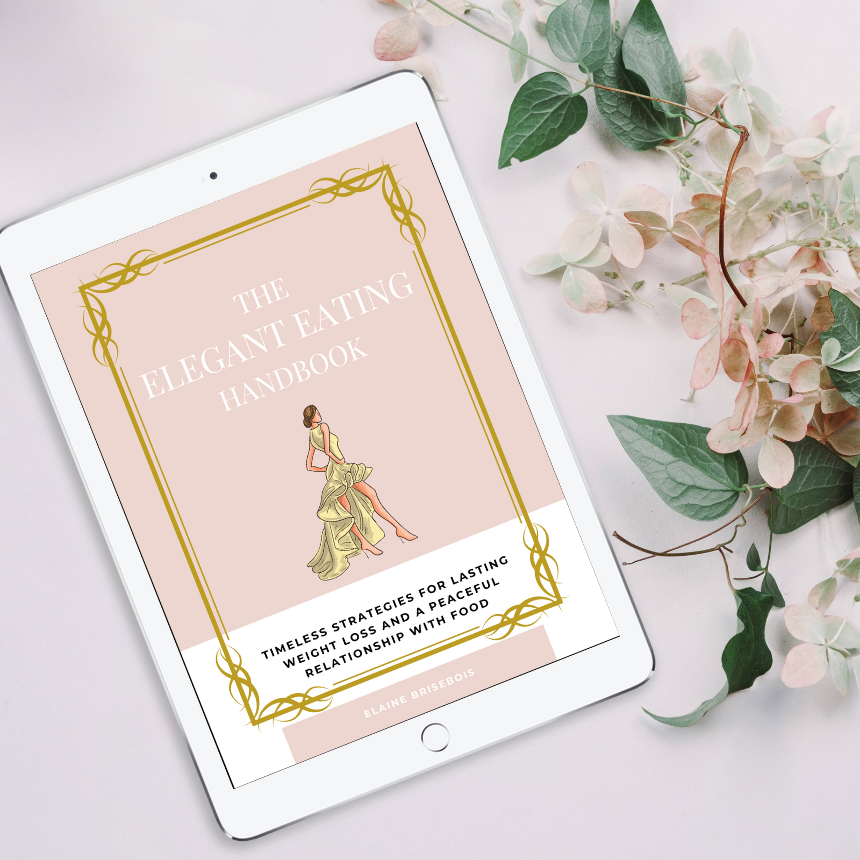
Get a free copy of my handbook!
The Elegant Eating Handbook: Timeless Strategies for Lasting Weight Loss and a Peaceful Relationship with Food.