
I eat perfectly in the daytime but then dinner turns into an all-night event.
I can’t watch Netflix without popcorn or snacks.
I was doing fine until my colleague brought in the doughnuts.
After a stressful day at work, I deserve a treat!
One glass of wine turned into 3.
It’s impossible to eat healthy when my husband is always tempting me with food.
These are just a few of the sentiments that I sometimes hear from clients—reasons why they can’t stick to their “eating plan,” despite their desired weight or health goals.
Why You Struggle to Stick to Your Plan
We can have the best of intentions to eat a certain way, but in the moment—when we’re stressed, tired, or emotionally drained—our primitive brain kicks in.
It feels easier to reach for what’s convenient or gives us a quick hit of energy.
If this sounds familiar, please know that nothing has gone wrong.
You’re not weak, undisciplined, or lacking willpower.
It’s just your brain doing what it knows how to do best:
- Seek pleasure
- Avoid discomfort
- Conserve energy
If you’ve been practicing the habit of giving in to those urges, you’ve simply become really good at it.
To change that, you have to practice the opposite: not giving in.
At first, that will feel uncomfortable. But over time, you begin to de-condition the habit, and it becomes easier not to act on the urge.
Enter: The 24-Hour Plan
Making decisions ahead of time is a powerful strategy for building confidence, trust, and self-integrity.
If you often eat “behind your own back” or sacrifice long-term goals for short-term comfort, this tool is for you.
Think of it as being the CEO of your eating.
You’re using your prefrontal cortex—the part of the brain responsible for:
- Executive function
- Planning
- Goal-setting
- Self-regulation
This plan takes decision-making out of the moment, so you don’t waste mental energy negotiating with yourself.
How It Works
You simply decide in advance what you’ll eat over the next 24 hours.
Then, when that time comes, you eat only what you planned—nothing more.
Why 24 Hours?
- It’s manageable.
- It’s realistic.
- It builds self-trust quickly.
Feel free to plan further ahead if that suits you.
But always be kind to yourself when creating your plan.
Be Kind to Your Future Self
When making your plan, think about the you who will be following it tomorrow.
Too often, I see clients create an idealistic plan they can’t realistically follow.
Sure, they can white-knuckle it for a day or two—but eventually, the willpower fades.
And when that happens, they abandon the plan altogether.
That’s not failure—it’s a sign the plan wasn’t built for real life.
The goal isn’t perfection. It’s follow-through.
Common Resistance (and What to Do About It)
You might be thinking:
- I don’t know what I’ll want to eat tomorrow.
- I’m going to a family event—I don’t know the menu.
- I like being spontaneous.
- I’m traveling.
- I don’t want to be obsessive.
Here’s the thing: you can be flexible and still plan.
Use as Much or as Little Detail as You Need
If you’re eating out and don’t know the menu:
Main meal salad with a healthy protein
1 glass of wine
If you’re cooking at home:
2 baked chicken thighs
½ baked sweet potato with butter
2 cups of cooked veggies
Want a little more flexibility?
Breakfast: 1 of the following — eggs + toast, Greek yogurt + berries, or protein smoothie
The more consistently you plan, the more intuitive it becomes—and the less detail you’ll need over time.
Plan for What Usually Derails You
Let’s say you’re going out on Friday night, and you usually order appetizers, dessert, and wine.
This time, your plan might be:
Appetizer: Simple green salad
Main: Whatever main dish appeals
Skip dessert, enjoy a cappuccino instead
That’s still progress—a little better than usual.
And that counts.
Plan Your Exceptions, Too
Exceptions are foods you wouldn’t eat daily but still want to enjoy—things like:
- A weekend croissant
- Ice cream on a summer evening
- Pizza with your family
If it’s planned ahead, it’s intentional—not reactive.
And if the moment comes and you no longer want it? Great. You don’t have to eat it.
When Cravings Hit, Try This
If a sudden craving pops up—licorice, gummy bears, a cupcake—tell yourself:
“I can have it, but I’ll wait 24 hours and plan it in.”
This simple pause can break the urgency.
And often, when the time comes, the craving is gone—especially if you’d have to leave the house to get it.
(It helps not to keep these things on hand.)
If you still want it the next day?
Eat it with intention—not guilt.
Final Thoughts
The more you practice the 24-Hour Plan, the more you’ll:
- Build self-trust
- Learn what’s realistic
- Catch your patterns in action
- Make food choices less reactive, more intentional
It’s not about rigid rules or flawless execution.
It’s about showing up for yourself—on purpose.

Hi! I’m Elaine, a Certified Nutritionist and Master Certified Health Coach. I support women in achieving their health and body goals while prioritizing a peaceful and balanced relationship with food.
Get a free copy of my handbook!
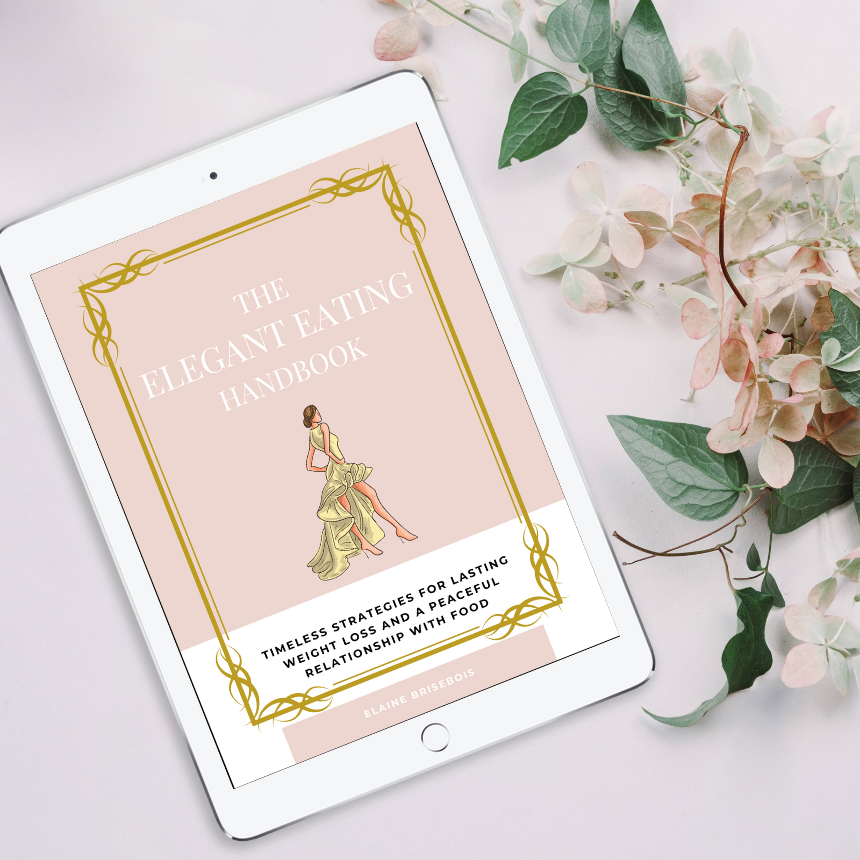
The Elegant Eating Handbook: Timeless Strategies for Lasting Weight Loss and a Peaceful Relationship with Food.
share with friends
keep reading...



[…] If you have a social engagement to attend, it’s best to decide ahead of time how much you will or will not eat/drink. […]
[…] If you’d like to learn more about implementing this tool into your own life, check out this blog post here: The 24 Hour Plan (Decisions Ahead of Time). […]
[…] Realistically plan. […]
[…] may choose to keep them in as planned exceptions and occasional treats – occasional being the operative word (more on this in chapter […]
[…] By planning now, you don’t have to make any decisions tomorrow. […]
[…] If you want to still incorporate those things that you have a lot of desire for, then only consume them when you’ve made the decision to do so from your “higher brain” (prefrontal cortex). […]
[…] Planning and making decisions ahead of time […]
[…] The 24 Hour Plan (Decisions Ahead of Time) […]
[…] Planning and making some decisions ahead of time […]
[…] the key here is to *plan ahead* (particularly for treats and […]
[…] 4. Decide Ahead of Time: Use the 24-Hour Plan to Create Freedom […]
[…] my private coaching program, one of the most important skills we focus on is learning how to plan and make food decisions ahead of […]